Uncommon Ground’s Inclusive Open Mic Proves the Power in Grassroots Art

Take a closer look at Uncommon Ground’s weekly open mic hosted every Monday at 8 PM.
Filmed and edited by Nikki Ramos, Patsy Newitt, Jocelyn Soto & Jessica Rish

In a neighborhood littered with Cubs fans stumbling down crowded streets, Uncommon Ground is unexpected. The cozy bar and restaurant tucked away on the corner of Clark and Grace Street, offers a haven from the chaos of Wrigley Field after a game. It sticks out like a sore thumb.

Despite Wrigleyville having a bar on every corner and Uncommon Ground’s lack of cohesion with the rest of the neighborhood, the tiny front still manages to fill the house every Monday night for the venue’s popular open mic event.

Uncommon Ground’s Monday night open mic event is a staple event of Chicago’s art scene. With a sign-up list that regularly fills up several pages of a yellow legal pad, the popular event gives performers of all varieties the opportunity to showcase their work.  

Monday June 3, 8 p.m., was just a regular Monday night for Uncommon Ground. But for first-time attendees, the diverse performances were a diversion from the typical open mic, something unique and welcome to all Chicagoans brave enough to sign up.

This personifies the premise of Uncommon Ground Open Mic – fundamental inclusivity. Performers are limited only by a five-minute time constraint. Outside of that, anyone is welcome and encouraged to perform anything. There are no limits.

The show featured a comedy set centered around a wet t-shirt contest, a man singing an acapella rendition of Lady Gaga and Bradley Cooper’s “Shallow” from A Star is Born, and an individual who got on stage exclusively to tell a long-winded story about entertainment in 1964.

The event is incredibly popular, hence the extensive legal pad sign-up list. Sign-up begins at 7 p.m. for the 8 p.m. show, but the website encourages performers to show up early to ensure a spot.

For more seasoned artists, 2019 marked their tenth year performing, for others, it was their first time on stage.

“The goal is to encourage upcoming artists to come out and share themselves and their material for the first time in front of their peers,” said Eric Quigley, the host, and producer of the event.

This complete adherence to inclusivity opens the door to potentially cringe-worthy material, but Uncommon Ground and its audience are not deterred. Uncommon Ground is intentionally welcoming. Bring your good, your bad, and your man telling a story.

For the performers, this inclusivity was palpable. “I haven’t been into too many scenes like this, but it was cool, it was open,” Jimmy Gavin, first-time musical performer, said. “It was fun because it was a combination of things and that’s what things like these are about.”

Unlike other open mic venues around the city, Uncommon Ground offers a tangible and immediate reward – the winner not only gets half of the donation earnings from the empty beer pitcher passed around throughout the show like an offering plate but also access to Chicago’s music scene.

Every Monday, Quigley chooses the best of the performances to move on to the next level. The weekly winners are invited to compete at a final competition where the ultimate winner receives a cash prize, Shure microphones, Greenstar Brewing, and Uncommon Ground Merchandise, a 30-minute artist photo shoot, an opportunity to perform an original piece on the radio, an on-air interview, an independent show at Uncommon Ground, and Opening Slots at Chicago Venues.

These final competitions are hosted twice a year, in January and July, and are open to the public.

The winner is chosen by Quigley, based on performance, song, musicianship, crowd reaction, and participation. The performers rarely question this subjectivity because winning is not really what the performance is about. It’s about embracing the opportunity for performance and the venue that supports it.

The goal of the competition is to create a network for emerging artists, providing an avenue for new performers to get their foot in the door.

“A lot of the times that is their first show, and then from there they are kind of set and have a network and know who they are booking through,” said Quigley. “I often see those same people playing Elbo Room and other places throughout the city. So it provides kind of a launching pad.”

Uncommon Ground itself is a perfect spot for the action. Wrigleyville, despite all its chaos, gives the venue extensive foot traffic. From the outside, Uncommon Ground is unassuming, but once inside, the venue is spacious, warm and bright.

The venue’s commitment to social awareness and inclusivity isn’t exclusive to its open mics. During the day, Uncommon Ground is a healthy and sustainable restaurant, home of the first certified organic brewery in Illinois and the first certified organic rooftop farm in the US. Vegetables are homegrown, and they have a solar panel on the roof.

Though they didn’t serve their full dinner menu in the space where the mic took place – dubbed “Music Room” by a colorful sign before the entrance –  the event had a specials and snacks menu, an extensive drink selection, and table service for audience members.

These aspects make Uncommon Ground uniquely suited for audience engagement, producing a community supportive of every act regardless of the quality.

June 3 proved no different, with some audience members even providing back up vocals from their seats to a performer who forgot his words. The audience isn’t sitting silently watching with an air of judgment, but instead, are actively making Uncommon Ground a place where performers feel at ease before going up on stage.

“It is a listening room,” Quigley said, “A lot of open mics are placed in bars where it’s noisy, and there is a lot going on. This room is designed around people bringing in their material and everyone paying close attention to it.”

It’s easy to dismiss open mics on the premise of inexperience, but Monday nights at Uncommon Ground prove that throwing standards out the window doesn’t have to diminish the validity of the art itself.

Uncommon Ground provides a perfect venue for deinstitutionalized art explicitly.

“Something like an open mic is a great creative outlet to come out and interact with people,” Gavin said, “You never know who you are going to meet, and just show what you are doing.”

Comedy Bar Puts a Spin on Traditional Open Mic Performances

This video shows highlights from The Comedy Bar’s weekly open mic night on Thursday evenings.

Open-mic events seem to have a cringe-worthy connotation – an assumption that the work performed will be rough, unprofessional, or often-times offensive.

Regardless of the validity in that connotation, the goal of open-mic events remains objectively honest – provide an outlet for those who lack access to higher standards of art performance.

The Comedy Bar, located in Gino’s East in the River North District, is one of the many open-mic opportunities in the Chicago area. Comedians of all skill levels are invited to sign up on Thursdays at 8:30.

Art can often feel exclusive to those who fit a certain status quo, making events like these necessary for the continuation of grassroots creativity.

Check out our video highlighting how the Comedy Bar plays a pivotal role in making comedy accessible and their entertaining wheel-shaped take on the typical open-mic.  

Balancing Rebellion

Caroline Schlegel has always been a rule follower since she was young, but despite it, all finds balance with rebellion in her everyday life.

Schlegel has dabbled in rebellion, whether it be bending gender norms or cutting her hair and dying it pink, but the moment that sticks out the most for her is her academic rebellion.

“I feel like a lot of rebellion that I have personally done has revolved around like I think an assignment in school has been stupid so I found a loophole to get like through it,” said Schlegel.

Schlegel had been raised by the rebellious movement of alternative music and holds a strong belief that rebellion is vital to society, whether it is small acts of change for yourself or change that will impact the world.

“Rebellion can exist on an intimate level, or it can be on a public scale,” said Schlegel. “I think it’s anything making a difference.”

Chicago Style: The Art of Rebellion

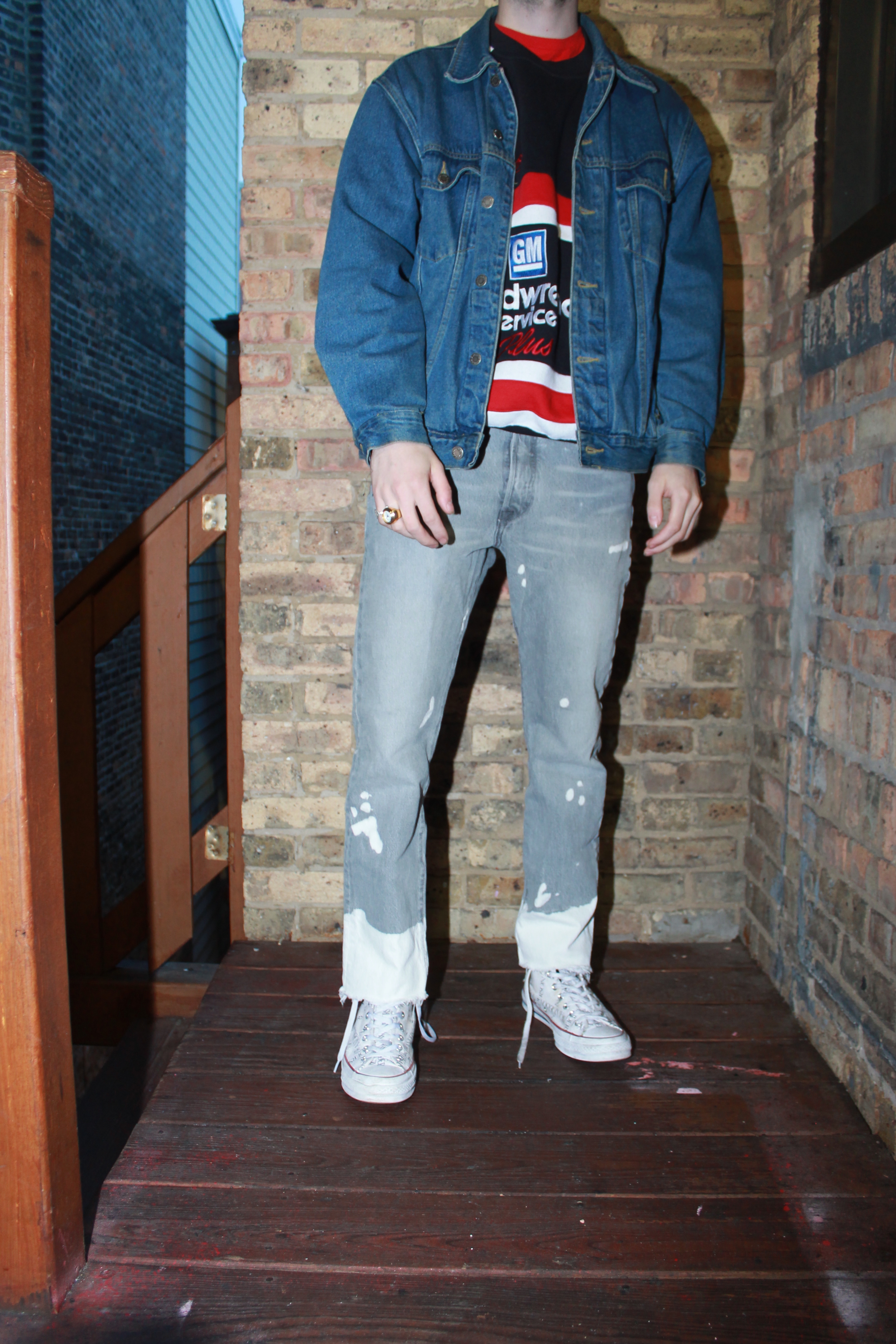
Chicago is a city that has been built on rebellion and has continued to be a city that houses rebellion. These themes of rebellion and innovation can be found all over the city of Chicago whether it is an organization that is educating the youth about the importance of voting or a new underground band. This Chicago rebellion has broken off into a more significant movement, Chicago style, a fashion movement that is mixing rebellion with innovative trends that have taken the city by storm.

Sophomores at DePaul University, Alec Baumrind, and Ethan Lawrence are both involved in the Chicago fashion scene paying attention to the ever-changing trends and new designers popping up on the scene. A constant theme is rebellion in the streetwear of Chicago, but it is more about the people that are wearing the clothes than the clothes itself.

“My style is rebellious in the sense that my style is just an extension of me,” said Lawrence. “Whether it is obvious or not who you are as a person is automatically extend into what you wear, what you say and how you interact with other people.”

Rebellion is not just about the clothes and breaking fashion norms, it is about the rebellious people creating rebellious pieces. Self-made Chicago designer, Joe Freshgoods has created cutting edge designs that have been worn by LeBron James and Chance the Rapper. Freshgoods is the creative mind behind the brand Don’t be Mad and is taking Chicago and the rest of the world by storm with his rebellious approaches to fashion.
“Even if you don’t think my shit is that good, you are going to know about it,” said Freshgoods.

While Freshgoods is becoming more popular on the mainstream level that comes with some downsides and continues to push the envelope to make Chicago a more fashion-forward city. The people that support Freshgoods and Don’t be Mad don’t do it because they like the brand and what it represents.

“Chicago Twitter told me to go crazy so I go crazy,” said Freshgoods.

Freshgoods is one of the many people taking steps to create more rebellious themes in the fashion industry, but these revolutionary movements start small with local creators.

“I see it more on a local level, than with the people high up in the industry,” said Baumrind. “People are creating at a better level when they have less resources. The creator is pretty rebellious in the first place to create.”

Local creators are trying to break fashion norms whether it is piecing together items that don’t make sense, putting chains on their shoes, or even making their own clothes altogether.

As a whole, the fashion industry has become more rebellious due to the number of people setting out to create. These small creators are influencing the mainstream trends. Freshgoods knows all about this due to the fact that some of his designs have been imitated before.

“People at the top are getting their ideas and inspiration from people that aren’t as well known, and that’s why what you think is new is something that you have already seen before,” said Baumrind.

Rebellion is becoming a bigger statement in the fashion industry because more people are being more rebellious in all walks of life. These people are the ones that are creating the trends that eventually become mainstream.

“I think more especially today,” said Lawrence. “I see way more different looks then I used to and people are leaving the house wearing stuff that you normally wouldn’t see.”

Some of the most common rebellious trends in fashion currently are but not limited to oversized clothing, wearing a lot of accessories, piercings and unisex clothing and blending the lines of masculinity and femininity. These trends can be found all over social media and the streets of Chicago.

Street Art and Speed Cameras

A map exploring the relationship between murals and traffic speed cameras in the Chicago area. Data courtesy https://data.cityofchicago.org/

Rebellion is a spectrum. Acts of rebellion can be simple or extravagant. This map explores the common and extreme themes of rebellion.

Graffiti and street art is a common form of rebellion, as a lot of street art and murals allude to other rebellious movements and is often illegal. In the city of Chicago, street art and murals are protected as they enhance the appearance of the city and because artists spend a lot of time on these large installments of public art.

Chicago created the Mural Registry to catalog street art in the city. Artists, organizations, and building owners can protect murals through the registry, and each work of art is assigned an ID so that people can locate the public art.

While it may not seem like a form of rebellion, but going over the speed limit and speeding is a common form of rebellion. According to creditdonkey.com, about 112,000 drivers in the United States are ticketed every day for speeding.

Due to the number of people that speed there have been many installments of speed cameras to catch and ticket people who drive over the speed limit. In the city of Chicago alone, there are 162 cameras to catch rebellious drivers.

Self Discovery Leads to Accidental Rebellion

Torres got her first tattoo in the summer of 2018. Her tattoo is a game piece from the game La Loteria, a game that reminds her of her family and her own identity. Torres photo.

In the summer of 2018, Andrea Torres did something for herself and got her first tattoo. It was a decision that was made with a lot of contemplation. Torres had to choose what she wanted permanently tattooed on her body and suffer the consequences of what her parents would think about the new addition to her body if they ever found out.

Torres finally acted out on her dreams of having a tattoo when she was turning 20 at the famous Chicago tattoo shop, Chicago Tattoo and Piercing Company off of the Redline Belmont stop.

“It was important for me to get my tattoo because it was the first purely selfish thing I’d ever done,” said Torres. “I do a lot to make sure others are happy and feeling okay, but I rarely take care of myself. It was kind of like treating myself for being who I am.”

Torres tattoo has only been a part of her body for almost a year, but the meaning has been with her a lifetime. Torres’ tattoo is the rose playing card from a Mexican bingo game called Lotería.

“My parents immigrated here from Mexico, so my tattoo is representative of my heritage and reminds me of where I come from and why I’m here,” said Torres.

Though Torres’ tattoo is a symbol of her and her family’s life she knew her parents might not approve of her decision but still went through with getting a tattoo even if it meant she had to deal with the consequences later.

“It was kind of an act of rebellion! I didn’t intend for it to be that way, but it was really fun to just have a little secret for me and myself only,” said Torres. “I don’t think I’ve done anything more rebellious than that.”

Torres did her best to hide the tattoo from her parents, but it did not last long due, and her parents eventually found out about her act of rebellion, and to Torres’ surprise, they were okay with her decision.

“I tried to keep it from my parents because they were raised in a society that looks down on tattoos, but I guess I wear too many crop tops,” said Torres. “My dad said he actually liked it, and my mom complained about why it was so big, but admitted she thought it was pretty.”

Although Torres’ rebellion did not last long, she is thankful that her decision was met with positive feedback, especially from her parents and would consider getting another tattoo in the future but more importantly wants to keep doing things for herself even if it means rebelling.

Tattoos: The Art of Rebellion

The iconic “Mom” tattoo for some would be considered a symbol of rebellion. This neon on sign that sits on the back wall of the Tattoo Factory is one of the many odes to rebellion that exsist within the shop. Photo Jessica Rish

Tattoo Factory in Chicago’s Uptown neighborhood is bustling on a late Thursday night. Multiple people fill the shop browsing the artwork that covers the walls, anxiously awaiting their appointment and checking out their new body modifications in the mirror. While everyone at the shop is different, they come together over one thing; doing something for themselves even if it means going against someone else.

Chris Von Zeleny is the head piercing technician at the Tattoo Factory and describes the shop as a house of rebellion. Von Zeleny has seen a lot of people come into the shop or the house of rebellion, but there is one demographic that Von Zeleny sees more than others.

“Almost 50 percent of people usually it is their first piercing or tattoo,” said Von Zeleny. “And usually they are college students in their freshman year that are just looking for something rebellious to do because they no longer are in high school and they want to rebel against their parents.”

DePaul freshman Megan Harnaga fits that demographic. The low hum from the needle overpowers the radio and conversation that fills the shop as she gets one of her tattoos touched up. Harnaga got her first tattoo back in November even knowing that it was a decision that her parents would not approve of.

“It was something that I wanted to do for a long time, so I decided it was the perfect opportunity to do it and maybe it was a little rebellious,” said Harnaga.

Harnaga got a small star on her wrist in honor of Lady Gaga and was not surprised by her parent’s reaction when she came home for break.

“Yeah, they were pissed,” said Harnaga while laughing. “I really don’t care too much about their thoughts on tattoos though because a week later I got a bigger tattoo on my arm and have been hiding that one for quite some time now, so I wonder how it will go when I finally build up the courage to tell them.”

Von Zeleny and Harnaga both have rebelled against figures of authority, but Von Zeleny encourages people not to take it too far.

The most rebellious thing I have ever done has been rebelling against the law, but I wouldn’t take it that far,” said Von Zeleny. “Rebellion is good fun if you are doing it for the all right reasons and not all the wrong reasons.”

Tattoo Factory is located on 4441 N Broadway, Chicago, IL 60640. The shop’s hours of operation are from 10am to 2am seven days a week.